
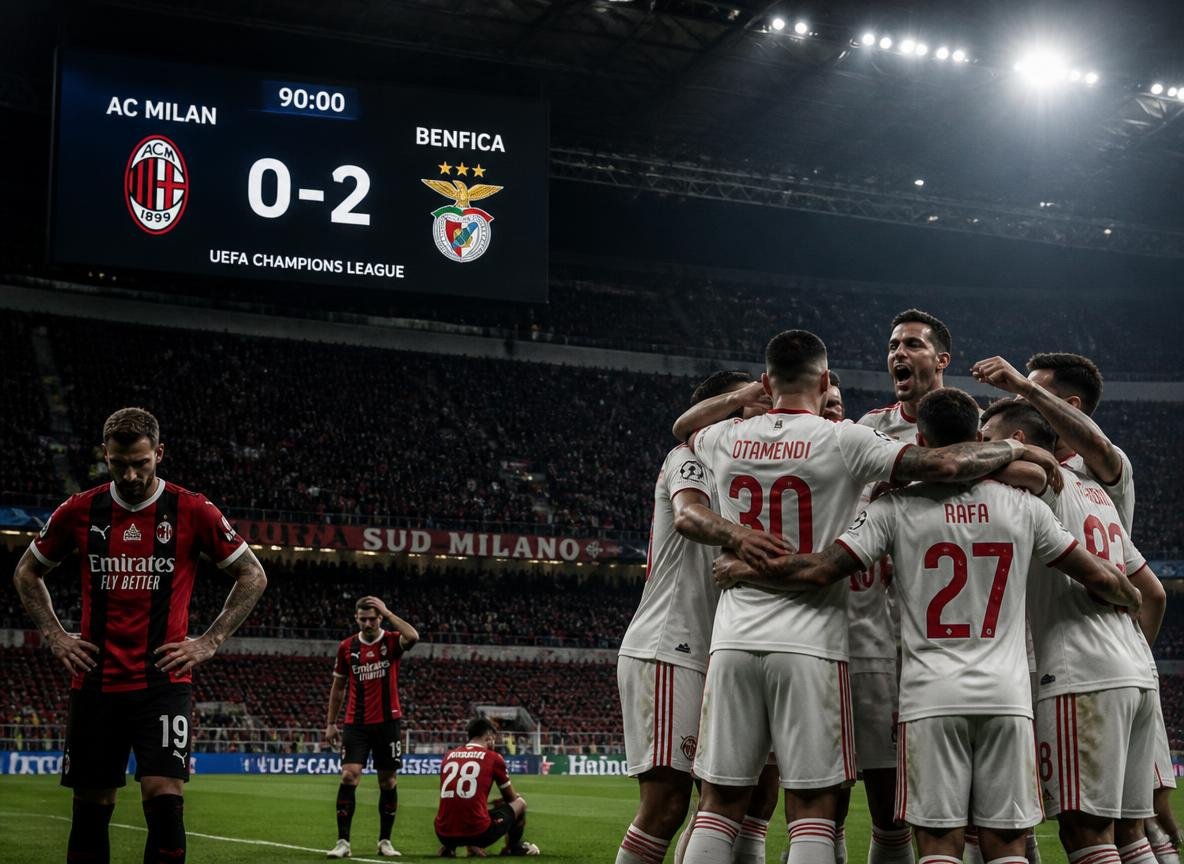
An epic showdown between two titans of European football ended with a masterclass from the visiting side. At the iconic San Siro stadium in Milan, SL Benfica defeated AC Milan 0-2 on an unforgettable UEFA Champions League night. With textbook tactical discipline, an impenetrable defensive structure, and lethal counterattacks, the Lisbon Eagles silenced the Rossoneri faithful and took home three golden points away from home.
Here is the complete match recap, featuring a tactical breakdown, key individual performances, and the broader impact on the European standings.
First Half: Tactical Balance and a Decisive Breakthrough
The match began just as the San Siro crowd anticipated: Milan sought to dictate the tempo through sustained possession in the attacking third, circulating the ball patiently through their midfield line. By utilizing pace and 1v1 dribbling along the left flank, the Italian side worked to open up seams in the Portuguese defense.
However, Benfica stepped onto the pitch with an exceptionally drilled game plan. Setting up two compact lines right outside their penalty area, the Portuguese side suffocated space between the lines and neutralized central passing avenues. Milan’s persistent pressure repeatedly ran into well-timed tackles and an authoritative backline.
Benfica’s composure soon paid off. Around the 34th minute, after regaining possession in the middle third, the Eagles executed a textbook rapid transition. Crisp, one-touch passing bypassed Milan’s counter-pressing structure, freeing up space along the right wing. A low, driven cross flashed across the box to meet an oncoming Portuguese attacker, who buried it on the half-volley into the bottom corner: Milan 0-1 Benfica.
The opener disrupted Milan’s tactical rhythm. Prior to the interval, the Rossoneri pushed for an equalizer via long-range strikes and set-piece opportunities, but were repeatedly denied by Benfica’s goalkeeper, who commanded his box with calm authority.
Second Half: Rossoneri Pressure and the Fatal Counter
Coming out of the break, Milan’s manager pushed the defensive line higher and made attacking substitutions to pin Benfica into their own half. For the opening 15 minutes of the second period, the game turned into a prolonged siege. Floating crosses and blocked shots kept the home crowd on edge.
Yet Benfica’s defensive resilience never cracked. The center-back pairing delivered a flawless display, dominating aerial duels and clearing dangerous cutbacks. As the minutes ticked away, Milan’s growing urgency gradually morphed into erratic passing and forced turnovers.
The decisive blow landed in the 78th minute. With Milan pouring men forward in search of a lifeline, Benfica intercepted an errant pass near their defensive box and launched a devastating 3v2 counter-attack. A pinpoint through ball caught the Milan center-backs flat-footed, sending the Benfica striker clean through on goal. Demonstrating absolute composure, he chipped the ball over the onrushing goalkeeper to make it 0-2.
In the closing stages, Milan mounted desperate attacks that were easily repelled, allowing Benfica to manage possession throughout stoppage time and seal a historic away victory on Italian soil.
Match Statistics
The post-match numbers tell the tale of two conflicting philosophies, highlighting the away side’s ruthless clinical finishing:
| Metric | AC Milan 🇮🇹 | SL Benfica 🇵🇹 |
| Final Score | 0 | 2 |
| Possession | 61% | 39% |
| Total Shots | 16 | 7 |
| Shots on Target | 4 | 4 |
| Passing Accuracy | 88% | 79% |
| Corner Kicks | 8 | 2 |
| Fouls Committed | 12 | 15 |
| Expected Goals (xG) | 0.85 | 1.42 |
The statistics emphasize the story of the match: while Milan dominated possession, Benfica was vastly superior in creating high-quality, high-percentage scoring chances.
Key Individual Performances
Benfica’s Standout Performers
- Impenetrable Defensive Wall: The central defenders and holding midfielders formed an unbreakable barrier. By denying Milan space to turn inside the box, they dominated decisive duels and stabilized the entire team.
- Composure in Transition: Benfica’s midfield demonstrated exceptional vision, instantly punishing Milan whenever their full-backs were caught out of position.
- Clinical Finishing: Scoring two goals from four shots on target highlights an elite team capable of winning matches in the margins.
Milan’s Tactical Pitfalls
- Lack of Final-Third Creativity: Despite enjoying the majority of possession, the Rossoneri were predictable in their build-up play, relying too heavily on low-percentage aerial crosses that were comfortably repelled.
- Defensive Overexposure: Eager to deliver an equalizer in front of their home supporters, Milan committed too many players forward, leaving their backline vulnerable to lightning-fast transitions.
Tactical Breakdown: How Benfica Outsmarted Milan
Benfica’s victory at San Siro was a triumph of tactical discipline over sterile possession. Milan relied on a conventional positional attack, looking to stretch the pitch wide. However, they lacked the sharp 1v1 execution required to break down Benfica’s compact, low-to-mid block.
Benfica embraced conceding possession, strategically closing down central passing channels and funneling Milan out wide into harmless crossing zones. Once possession was turned over, verticality was instant: two or three rapid passes were enough to launch forwards into space against isolated defenders. This tactical pragmatism served as an absolute clinic in modern European cup football.
Key Takeaways and What Lies Ahead
A commanding 0-2 triumph over AC Milan establishes Benfica as a dangerous opponent in any European venue. Securing a clean sheet and all three points at San Siro not only elevates the Eagles in the Champions League standings, but also provides a massive psychological boost for the rest of the continental campaign.
For Milan, this defeat serves as an urgent wake-up call. The coaching staff must quickly identify alternative tactical solutions against low defensive blocks while addressing structural weaknesses in transition defense if they hope to secure knockout-stage qualification.