
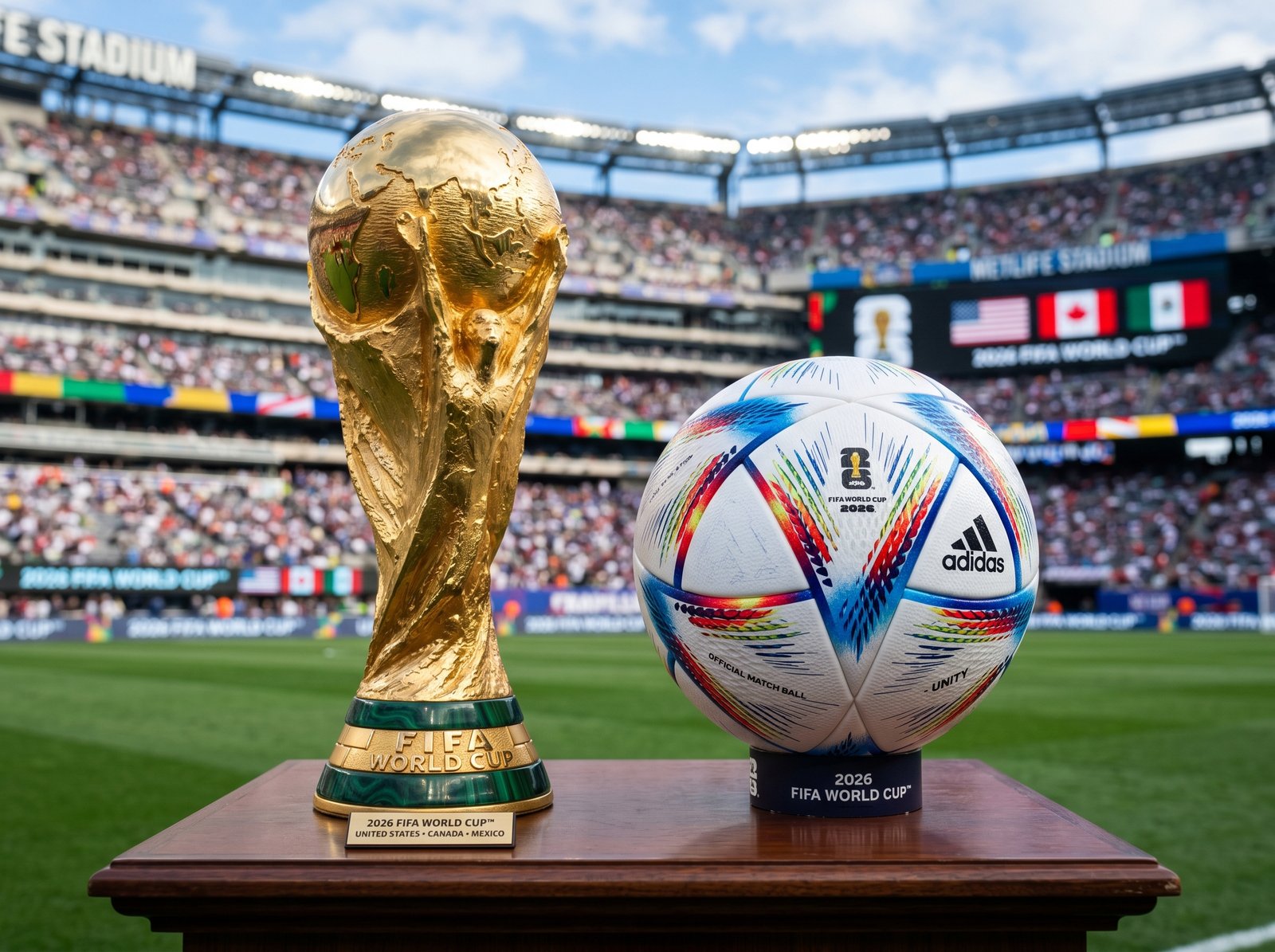
The FIFA World Cup 2026 is set to be the largest and most ambitious edition in the tournament’s history. As the first World Cup hosted across three countries—Canada, Mexico, and the United States—it promises an unforgettable spectacle for fans worldwide. With 48 teams, 104 matches, and a record-breaking 39-day duration, this tournament will redefine global football.
Whether you’re planning your ultimate World Cup 2026 trip, seeking the full schedule, or exploring host cities and venues, this comprehensive guide covers everything. Optimized for search terms like “FIFA World Cup 2026 dates,” “World Cup 2026 host cities,” “2026 World Cup format,” and “World Cup 2026 schedule,” it delivers the latest details as of July 2026.
Official Dates and Tournament Timeline for FIFA World Cup 2026
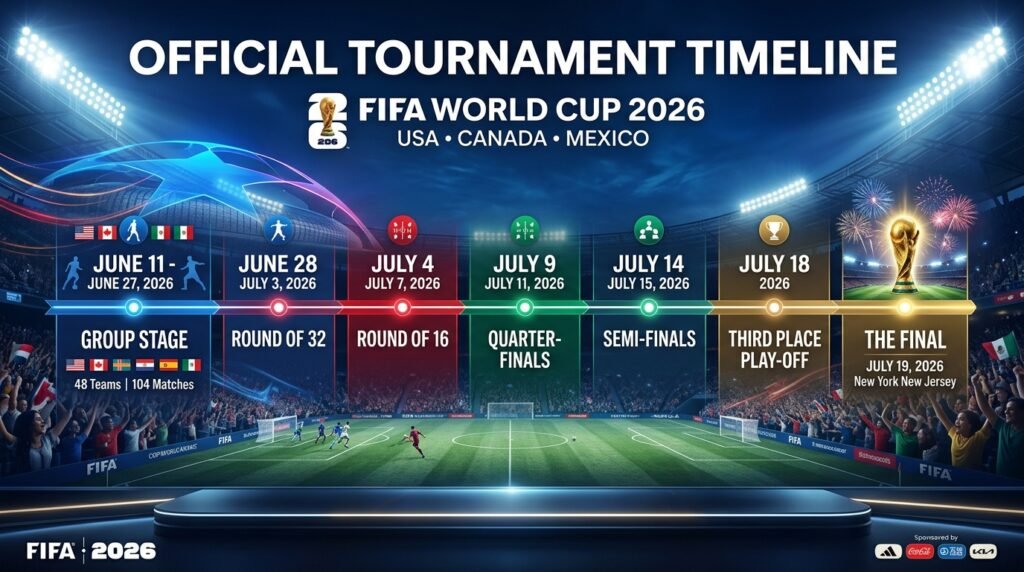
The FIFA World Cup 2026 kicks off on June 11, 2026, and concludes with the final on July 19, 2026. This extended timeline accommodates the expanded format and massive logistical demands of a tri-nation event.
- Opening Match: June 11, 2026, at Estadio Azteca in Mexico City. Mexico faces South Africa in a rematch of the 2010 opener.
- Group Stage: Runs from June 11 through late June, with matches spread across all 16 venues to minimize travel fatigue.
- Knockout Stage: Begins with the Round of 32 around June 28–29, progressing through the Round of 16, quarterfinals, semifinals, and third-place match.
- Final: July 19, 2026, at MetLife Stadium in New York New Jersey (often called New York/New Jersey Stadium).
This schedule allows fans to experience football across diverse time zones and climates, from the heat of Miami to the cooler vibes of Vancouver. For travelers, the extended window means more flexibility for multi-city itineraries.
The Revolutionary 48-Team Format Explained
The 2026 edition marks a major evolution with 48 teams instead of the traditional 32. This change increases accessibility and excitement, bringing more nations into the global spotlight.
Group Stage Structure
- 12 groups of 4 teams each.
- Top 2 teams from each group advance automatically to the Round of 32.
- The 8 best third-placed teams also qualify, creating a 32-team knockout bracket.
- Each team plays 3 group matches, ensuring competitive balance while expanding opportunities.
Knockout Stage
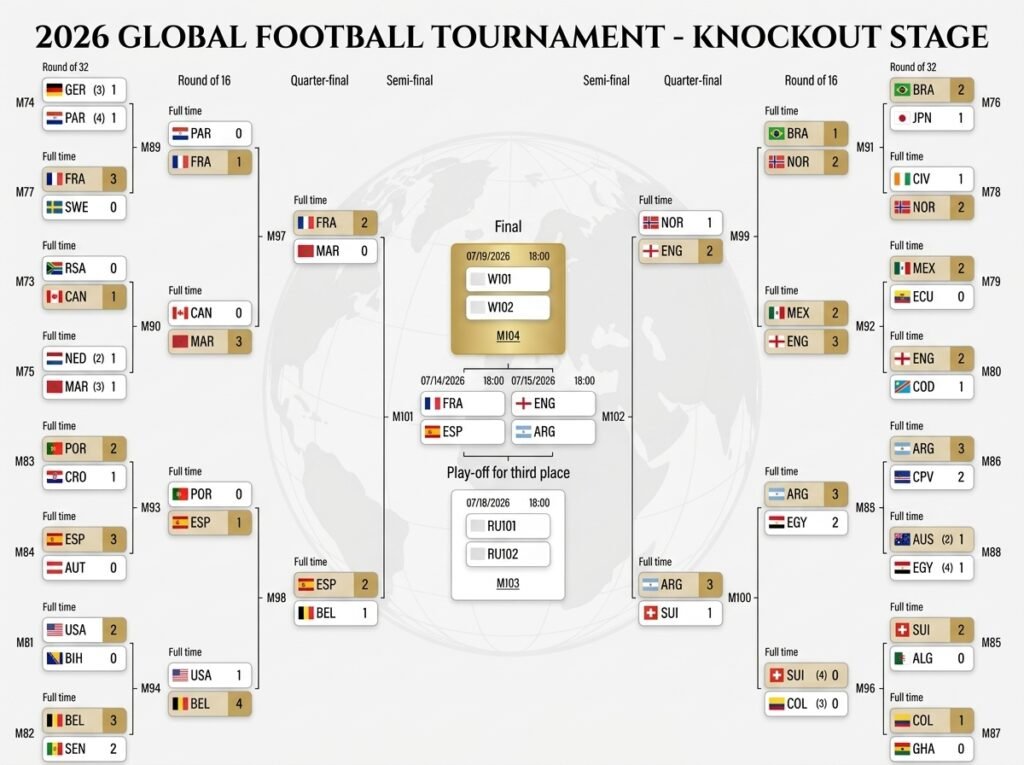
The single-elimination phase includes:
- Round of 32
- Round of 16
- Quarterfinals
- Semifinals
- Third-place match
- Final
This format rewards consistency in the groups while introducing high-stakes drama earlier. Tie-breakers follow standard FIFA rules: points from head-to-head, goal difference, goals scored, and fair play points.
Why this matters for fans: More matches mean more opportunities to see underdogs shine. Expect intense rivalries and historic debuts from teams like Cabo Verde, Curaçao, and others who qualified through grueling campaigns.
Host Countries and the 16 Iconic Host Cities
The 2026 World Cup is uniquely shared among Canada, Mexico, and the United States, with 11 venues in the US, 3 in Mexico, and 2 in Canada. This distribution celebrates North American football heritage while showcasing modern infrastructure.
United States Venues (11 cities, majority of matches)
- Atlanta: Mercedes-Benz Stadium – Known for its retractable roof and vibrant atmosphere.
- Boston: Gillette Stadium (Foxborough) – Historic New England football hub.
- Dallas: AT&T Stadium – Massive capacity and cutting-edge tech.
- Houston: NRG Stadium – Reliable indoor venue with strong local support.
- Kansas City: Arrowhead Stadium – Passionate fans and NFL-proven facilities.
- Los Angeles: SoFi Stadium – Hosts the USMNT opening match and multiple high-profile games; paired with fan festivals at LA Memorial Coliseum.
- Miami: Hard Rock Stadium – Tropical vibes and South Florida energy.
- New York New Jersey: MetLife Stadium – Hosts the Final; enormous capacity for the climax.
- Philadelphia: Lincoln Financial Field.
- San Francisco Bay Area: Levi’s Stadium.
- Seattle: Lumen Field.
Mexico Venues (3 cities)
- Mexico City: Estadio Azteca – Iconic venue hosting the opener; legendary atmosphere.
- Guadalajara: Estadio Akron.
- Monterrey: Estadio BBVA.
Canada Venues (2 cities)
- Toronto: BMO Field.
- Vancouver: BC Place – Stunning Pacific Northwest setting.
Each stadium meets FIFA’s high standards for capacity (mostly 60,000+), technology, and sustainability. Many feature retractable roofs or advanced cooling systems suited to North American summers.
Pro Tip for Travelers: With matches spread across thousands of kilometers, plan smart itineraries. Domestic flights or Amtrak routes connect many US venues efficiently. Cross-border travel between the three countries is straightforward with proper documentation.
Stadium Capacities, Match Allocations, and Fan Experiences
The tournament features 104 matches total. US venues host the bulk (around 78), with Mexico and Canada each handling about 13. Larger stadiums like MetLife and SoFi will see high-demand knockout games.
Fan experiences go beyond the pitch:
- FIFA Fan Festivals in each host city, featuring live broadcasts, music, food, and cultural activities.
- Official Fan Zones with interactive exhibits and local flavors.
- Sustainable initiatives, including public transport incentives and green energy use at venues.
Cities like Los Angeles are planning 39 days of celebrations, making them ideal bases for immersive trips.
Qualification Journey: How the 48 Teams Earned Their Spots
Hosts Canada, Mexico, and the USA qualified automatically. The remaining 45 spots were fiercely contested across FIFA confederations:
- UEFA (Europe): 16 teams
- CAF (Africa): 9 + play-offs
- AFC (Asia): 8 + play-offs
- CONMEBOL (South America): 6 + play-offs
- CONCACAF (North/Central America & Caribbean): Additional slots beyond hosts
- OFC (Oceania): Play-off opportunities
Qualifiers concluded earlier in 2026, with standout performers and debutants joining established powerhouses like Brazil, Argentina, Germany, and France.
Why FIFA World Cup 2026 Will Be Historic
This edition breaks records in scale, inclusivity, and economic impact. Projected attendance could surpass previous tournaments significantly, boosting local economies in host cities. For viewers at home, expanded broadcasting and digital coverage ensure global access.
Legacy: New infrastructure investments, youth development programs, and strengthened football ecosystems in North America will benefit the sport long after the final whistle.
Planning Your 2026 World Cup Adventure: Tickets, Travel, and Tips
- Tickets: Expect high demand. Monitor official FIFA channels for sales phases and hospitality packages.
- Accommodations: Book early in host cities. Consider central locations near transit hubs.
- Travel Hacks: Leverage multi-city flight deals. Apps for real-time schedules and traffic will be essential.
- Visa and Entry: Check requirements for the three countries well in advance.
- Sustainability: Opt for eco-friendly options to align with FIFA’s goals.